Angels from the Realms of Glory

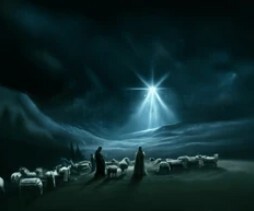
"Angels from the Realms of Glory" Hymn Lyrics
Words by James Montgomery (1816) Music (REGENT SQUARE) by Henry Smart (1867)
Verse 1
Angels, from the realms of glory, Wing your flight o'er all the earth; Ye who sang creation's story, Now proclaim Messiah's birth: Refrain: Come and worship, come and worship, Worship Christ, the new-born King.
Verse 2
Shepherds, in the field abiding, Watching o’er your flocks by night, God with man is now residing; Yonder shines the infant light: Refrain: Come and worship, come and worship, Worship Christ, the new-born King.
Verse 3
Sages, leave your contemplations, Brighter visions beam afar; Seek the great Desire of nations; Ye have seen his natal star: Refrain: Come and worship, come and worship, Worship Christ, the new-born King.
Verse 4
Saints, before the altar bending, Watching long in hope and fear, Suddenly the Lord, descending, In his temple shall appear: Refrain: Come and worship, come and worship, Worship Christ, the new-born King.
The Author and Composer
Author: James Montgomery (1771–1854)
- Background: Montgomery was a Scottish-born poet, journalist, and passionate Moravian (a Protestant denomination). His life was marked by adversity; his missionary parents left him in a Moravian school when he was five and died in the West Indies seven years later.
- Significance: Like Isaac Watts, Montgomery was a prolific hymn writer, composing over 400 hymns. He was also a fierce advocate for social justice, using his newspaper, The Sheffield Iris, to speak out against slavery and other injustices. He was imprisoned twice for his "seditious" political writings. His hymns, which include other classics like "Go to Dark Gethsemane," are known for their profound theological insight and high poetic quality.
- Hymn Origin: He wrote this poem on Christmas Eve in 1816 and published it in his newspaper on Christmas Day, under the title "Good Tidings of Great Joy to All People."
Composer: Henry Smart (1813–1879)
- Background: Henry Smart was a distinguished English organist and composer. Though he began to lose his sight at age 18 and was completely blind by his early 50s, he maintained a successful career, known for his skill in improvisation.
- Significance: Smart composed the tune, REGENT SQUARE, in 1867. This melody is stately, strong, and highly memorable, perfectly matching the majestic call to worship in Montgomery's text. It is the tune most frequently used for this hymn in the United States and Canada.
Scriptural Significance
This hymn is unique because, rather than focusing on a single moment, it acts as a dramatic tableau, calling all key participants—from the celestial down to the human—to the manger.
|
Hymn Line / Section |
Scriptural Source |
Theological Significance |
|
"Angels... Ye who sang creation's story, Now proclaim Messiah's birth" |
Luke 2:13–14: "And suddenly there was with the angel a multitude of the heavenly host praising God, and saying, Glory to God in the highest, and on earth peace, good will toward men." Job 38:7: "When the morning stars sang together, and all the sons of God shouted for joy?" |
Montgomery connects the angels who were present at Creation (Job) with those who heralded the Incarnation (Luke), suggesting Christ's birth is a moment of cosmic, world-altering significance. |
|
"Shepherds, in the field abiding... God with man is now residing" |
Luke 2:8, 15: "And there were in the same country shepherds abiding in the field..." Isaiah 7:14 and Matthew 1:23: "Behold, a virgin shall be with child, and shall bring forth a son, and they shall call his name Emmanuel, which being interpreted is, God with us." |
This emphasizes the doctrine of the Incarnation—that God has physically taken up residence on Earth as a man (Emmanuel). The shepherds represent humble, common humanity. |
|
"Sages... Seek the great Desire of nations; Ye have seen his natal star" |
Matthew 2:1–2: "Now when Jesus was born in Bethlehem... there came wise men from the east... Saying, Where is he that is born King of the Jews? for we have seen his star in the east, and are come to worship him." Haggai 2:7: "And I will shake all nations, and the desire of all nations shall come: and I will fill this house with glory, saith the Lord of hosts." |
The Magi (Sages) represent the Gentile world and the educated elite. The "Desire of nations" refers to the fulfillment of Old Testament prophecy concerning the Messiah, who would bring ultimate peace and glory, desired by all peoples. |
|
"Saints, before the altar bending... Suddenly the Lord, descending, In his temple shall appear" |
Luke 2:25, 36–38 (Simeon and Anna) and Malachi 3:1: "The Lord, whom ye seek, shall suddenly come to his temple, even the messenger of the covenant, whom ye delight in: behold, he shall come, saith the Lord of hosts." |
This stanza incorporates those who waited faithfully for centuries (like Simeon and Anna), showing that Christ’s birth was not random, but the long-awaited fulfillment of God's promise. |
Uplifting Lore and Relevance
The hymn's greatest uplifting story lies not in a single incident but in James Montgomery's personal resilience and political activism.
- A Message of Unity in Division: Montgomery wrote this hymn in 1816 during a time of significant political and social tension in England, especially in the industrial town of Sheffield, where he lived. As a champion of reform and abolition, he was constantly at odds with the government. By publishing "Angels from the Realms of Glory" in his politically charged newspaper on Christmas Day, he offered a powerful message that transcended their earthly conflicts.
- The Universal Call: The hymn's structure—calling on Angels, Shepherds, Sages, and Saints—was a profound statement for a journalist living in a highly stratified society. It says:
- The Angels (Heavenly realm)
- The Shepherds (The poor and marginalized)
- The Sages (The wealthy, educated, and foreign)
- The Saints (The devout church-goers)
... all stand on equal footing before the Incarnate King. The message is that Christ's birth unites the entire cosmos and breaks down human barriers of class, wealth, and nationality, calling every single person to the singular act of worship. It serves as a reminder during the Christmas season that the joy of the Nativity is meant for everyone, regardless of their status.