Jesus Saves

Lyrics
Author: Priscilla J. Owens (1882) Composer: William J. Kirkpatrick (1882)
Verse 1
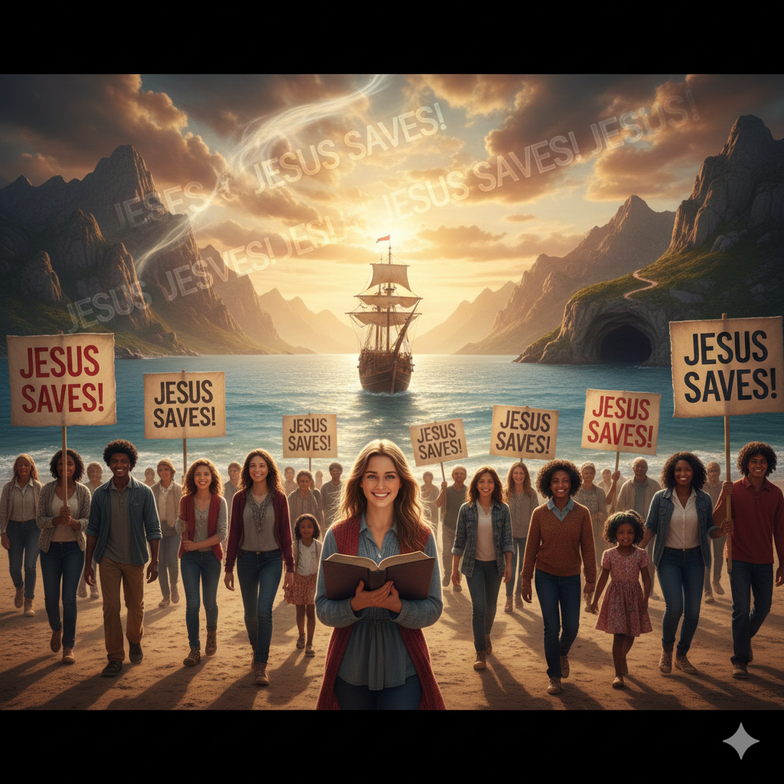
We have heard the joyful sound: Jesus saves! Jesus saves! Spread the tidings all around: Jesus saves! Jesus saves! Bear the news to every land, Climb the mountains, cross the waves; Onward! 'tis our Lord's command; Jesus saves! Jesus saves!
Verse 2
Waft it on the rolling tide: Jesus saves! Jesus saves! Tell to sinners far and wide: Jesus saves! Jesus saves! Sing, ye islands of the sea; Echo back, ye ocean caves; Earth shall keep her jubilee: Jesus saves! Jesus saves!
Verse 3
Sing above the battle strife: Jesus saves! Jesus saves! By His death and endless life: Jesus saves! Jesus saves! Shout it softly through the gloom, When the heart for mercy craves; Sing in triumph o'er the tomb: Jesus saves! Jesus saves!
Verse 4
Give the winds a mighty voice: Jesus saves! Jesus saves! Let the nations now rejoice: Jesus saves! Jesus saves! Shout salvation full and free, Highest hills and deepest caves; This our song of victory: Jesus saves! Jesus saves!
Background on the Hymn and Creators
Author: Priscilla Jane Owens (1829–1907)
- Life and Calling: Priscilla J. Owens was an American schoolteacher who spent nearly fifty years in the public school system of Baltimore, Maryland. She was deeply committed to her Sunday School work at the Union Square Methodist Episcopal Church.
- Hymn Writing: Most of her hymn texts were written specifically for children's services and Sunday School gatherings. She has several beloved hymns to her credit, including "We Have An Anchor" (also known as "Will Your Anchor Hold?") and "Give Me the Bible."
- Origin of "Jesus Saves": She wrote the text for a Sunday School missionary service around 1882 (though some sources suggest an earlier appearance in 1868). Her goal was to create an exciting, marching-style missionary song that children and adults could sing to proclaim the Gospel worldwide. The original tune it was set to was a chorus from a European opera, which eventually gave way to the more familiar one.
Composer: William James Kirkpatrick (1838–1921)
- Life and Work: William J. Kirkpatrick was an Irish-born American musician, composer, and music publisher. He was a prolific composer and compiler of gospel songs and hymns, particularly within the Methodist Episcopal tradition.
- The Tune: Kirkpatrick set Owens' text to his now-familiar tune in 1882, publishing it in the collection Songs of Redeeming Love. The tune, often simply named JESUS SAVES, provides the joyful, march-like energy that has made the hymn so enduring and suitable for evangelistic campaigns.
- Legacy: Along with other contemporary composers, Kirkpatrick was instrumental in popularizing the American gospel hymn style, which was highly favored in the revival meetings of evangelists like D.L. Moody and Ira D. Sankey.
Significance of the Hymn
"Jesus Saves" is essentially a missionary anthem. Its significance lies in its powerful simplicity and its focus on the Christian's mandate to spread the Gospel.
- Evangelistic Power: The repeated, bold phrase "Jesus saves!" is an unmistakable, universal declaration of the core Christian message. This made it immensely popular in evangelistic services and revival campaigns.
- Call to Action: Stanza 1 ("Bear the news to every land, Climb the mountains, cross the waves; Onward! 'tis our Lord's command") strongly reminds believers of the Great Commission to proclaim salvation to the world.
- Universal Hope: The hymn declares that the message is for "every land," "sinners far and wide," and "all the nations," underscoring the universal scope of Christ's redemptive work.
Scriptural Significance
The theme of the hymn is wholly centered on the name and mission of Jesus Christ, echoing several key passages:
- The Name Itself:
"And she shall bring forth a son, and thou shalt call his name JESUS: for he shall save his people from their sins." — Matthew 1:21
- The Central Message (Stanza 1): The command to spread the news is directly tied to the Great Commission.
"And he said unto them, Go ye into all the world, and preach the gospel to every creature." — Mark 16:15 "But ye shall receive power, after that the Holy Ghost is come upon you: and ye shall be witnesses unto me both in Jerusalem, and in all Judaea, and in Samaria, and unto the uttermost part of the earth." — Acts 1:8
- Salvation's Source (Stanza 3): His death and resurrection are the foundation of saving power.
"For I delivered unto you first of all that which I also received, how that Christ died for our sins according to the scriptures; And that he was buried, and that he rose again the third day according to the scriptures:" — 1 Corinthians 15:3-4 "Neither is there salvation in any other: for there is none other name under heaven given among men, whereby we must be saved." — Acts 4:12
- Triumph Over the Tomb (Stanza 3):
"O death, where is thy sting? O grave, where is thy victory?... But thanks be to God, which giveth us the victory through our Lord Jesus Christ." — 1 Corinthians 15:55, 57
Uplifting Lore and Stories
While specific detailed lore about individual conversions tied directly to this hymn's use is less common than for hymns like "Amazing Grace" or "It Is Well With My Soul," its widespread adoption in evangelism speaks to its powerful effect.
The Billboard Phenomenon
The phrase "JESUS SAVES" became a ubiquitous, stand-alone declaration on billboards, street signs, and graffiti across America in the 20th century. This hymn, with its repeating, declarative chorus, is a primary source of that enduring, simplified message. The hymn essentially gave the Christian world a battle cry that could be easily shortened and displayed for maximum impact.
The Missionary Spark
The most uplifting story is the original intent: the hymn was written for a missionary service for a Sunday School. It was designed to ignite a passion for global missions in the hearts of children. The image of a teacher, Priscilla Owens, writing this simple, fervent poem for her pupils, who then carried its message into the world, is a powerful reminder that God can use the most humble and focused acts of service to achieve worldwide impact. It emphasizes the truth that the most profound theological concepts can be conveyed with the simplest words.